
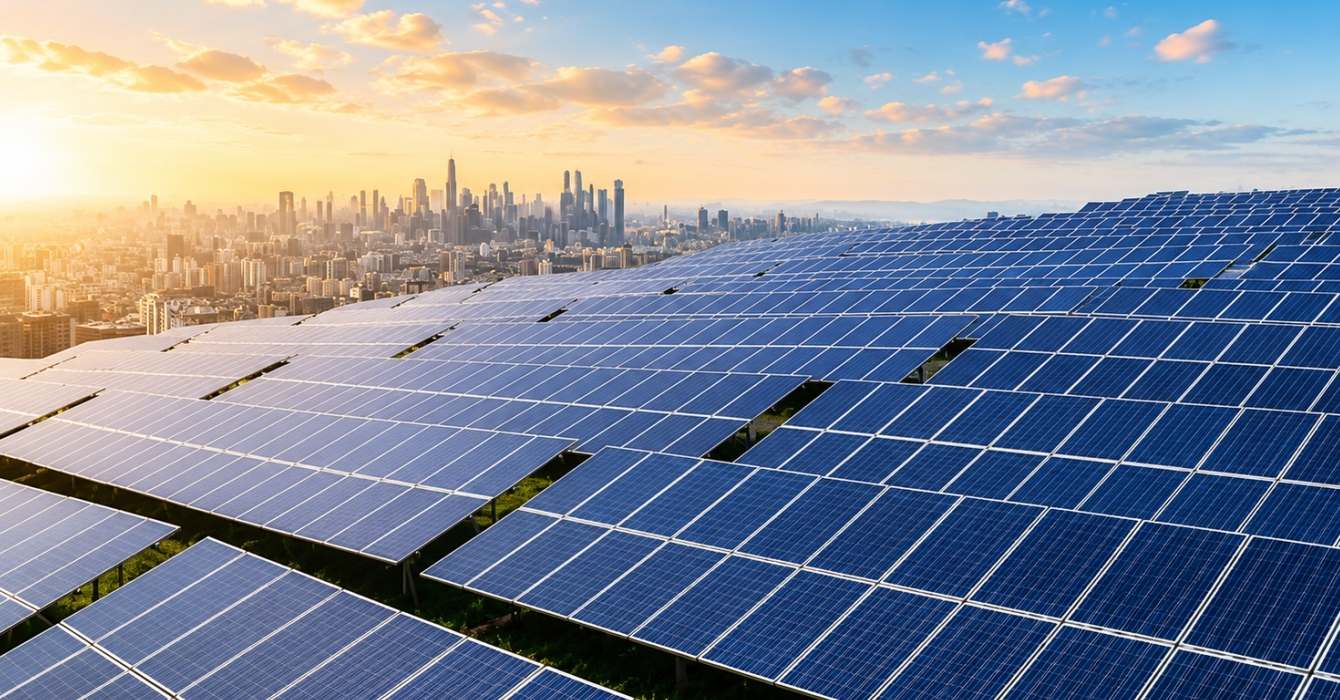
With electricity rates on the rise, many home and business owners are seeking ways to control their electricity costs. With solar technology now commissioned in people’s homes, office buildings, stores, factories and other buildings, solar energy is a viable alternative. On-grid solar systems in Chennai are one of the most popular solar systems available. An on-grid solar system, or grid-connected solar system, is a type of solar system that operates in parallel with the existing power grid. The solar panels are able to produce electricity throughout the day, which can be utilised on site. Solar system generation in excess of use can be exported to the electrical grid as per local conditions of electricity supply and the net-metering arrangement. When the sun doesn’t provide sufficient electricity, it can be obtained from the grid as normal.
Let’s dive into this blog to explore solar power for the first time, understand how this system works, what it includes, and whether it suits your property.
“An on-grid solar system connects the power of sunlight with the reliability of the electricity grid.”
An on-grid solar system is a solar power setup connected directly to the public electricity grid. Compared to an off-grid system, it does not normally depend on a battery bank to store electricity for later use. Instead, the system works in coordination with the grid. Solar panels installed on the roof or another suitable area capture sunlight and convert it into direct current DC electricity. A solar inverter then converts this electricity into alternating current AC, which can be used by common electrical appliances and equipment. The electricity generated by the panels can be used to operate lights, fans, computers, air conditioners, pumps, machinery, and other connected equipment.
The basic setup generally includes:
The procedure relies largely on a few electrical parts, and though not too complicated, is easy to understand. The solar panels get sunlight during the daylight hours and during the day produce DC electricity. This electricity gets sent to the solar inverter, which converts it to a type of electricity known as Alternating Current (AC). The power generated is transferred to the electrical system of the property. If power consumption happens during that time, the electric energy generated can cover part or all of the requirement.
Excess energy generated by the panels can be sold into the electricity grid following a net metering agreement. No sun during the night means no electricity is generated by the solar panels at night. The building can thus draw electricity from the grid. This integration of solar generation onto the electricity grid sets apart an on-grid system from stand-alone solar projects.
Each part has a distinct function to ensure the safe and efficient operation of the solar installation.
Solar panels: The solar panels do the job of transforming sunlight into electricity. They can vary in size and number depending on various factors like electricity consumption, roof space, sunlight and the size of the system needed.
Solar inverter: An on-grid solar system’s most crucial component is the inverter. It transforms the DC electric power generated by the solar panels into AC electric power, which can be utilised by electrical appliances and the electric grid.
Mounting structure: A strong and well-positioned mounting structure is required for solar panels. It helps to hold the panels in place and achieve proper orientation and inclination.
Electrical cables and protection devices: Electric power is delivered via cables between various parts of the system. Proper installation of protection devices like isolators, circuit breakers, and surge protection devices safeguards the electrical system.
Metering system: A meter suitable for the applicable electricity regulations may provide electricity meter data of electricity exported to or imported from an electricity grid. This enables you to arrive at the balance in the electricity account.
An on-grid system can provide a number of practical benefits to properties with an existing reliable connection to the grid.
Lower Dependence on Purchased Electricity
A well-designed solar system can produce a substantial amount of energy needed by a building complex. This can lower the level of electricity consumption as a result of buying it from the grid.
No Large Battery Bank Required
The system is also connected to the power grid and therefore won’t need a battery bank unless more electricity is needed than what is being produced. This makes the setup easier than installing one using battery storage.
Better Use of Rooftop Space
Electric production without using extra land can be achieved on the roofs of residential and commercial buildings. Before installing, it will be necessary to ensure that the available space on the roof is suitable, as well as the structural fit.
Excess Solar Power Can Be Exported
Excess electricity can be exported to the grid, either via an approved net metering or grid-export arrangement, when solar generation exceeds immediate use. Precise details of what happens and how it will be paid for will vary according to local electricity providers and the relevant laws.
Helps Reduce Conventional Electricity Consumption
The electricity produced by the solar system during the day may decrease the need for electricity produced by traditional means. This can be especially helpful to businesses that use a considerable amount of electricity during the day.
An on-grid system can work well for many properties, but it is not automatically the right choice for everyone. The property’s electricity consumption pattern, available roof area, budget, grid connection, and local regulations all need to be considered. A property with high daytime electricity consumption may be able to make direct use of a large portion of its solar generation. On the other hand, a property that consumes most of its electricity at night may have a different requirement. A professional site assessment can help determine the appropriate system size instead of simply selecting a system based on available roof space.
Before selecting a system, it is useful to look at:
The biggest difference between these two systems is how they handle electricity when solar power is unavailable. Now, when you install an on-grid solar system, it will be connected to the electricity grid. It will utilise electricity generated by the solar cells when the sun is shining and will utilise electricity from the electricity grid when it is needed. Typically, it doesn’t depend on batteries to run normally. On the other hand, an off-grid solar system is a solar system that does not depend on the utility grid. It typically needs batteries or some other way of storing electricity to provide power when the sun isn’t shining.
A hybrid solar system, which includes a mixture of solar panels, batteries, and the power grid, is also available. Determining which should be used depends on the needs of the property. If your home or business has a reliable grid connection, you might want to think about installing an on-grid system, as it requires additional equipment and possibly a larger roof area. If your home or business is in a place with a reliable grid connection, then you may want to consider getting an on-grid system installed, but it might need more equipment and a bigger roof when you’re preparing your installation.
“With the right solar system, every ray of sunshine can become a useful source of power.”
While maintenance is not something that solar systems need to be performing, it will help ensure the performance of the solar system. Dust, bird droppings, leaves and other debris may build up on the surface of the panels and obstruct sunlight hitting the surface. However, some periodic maintenance may need to be carried out, especially in dusty areas. You should also keep an eye on the system’s production and determine if production has strayed from normal. Sometimes modern inverters and monitoring platforms may offer details relating to electricity generation and system operation. It is also worth using the services of professionals because they will be able to identify the problem with the cables, connections, mounting structures, or protective equipment.
There is a straightforward maintenance programme that can be followed, such as:
An on-grid solar system in Chennai offers a practical way to generate electricity from sunlight while remaining connected to the existing power grid. For beginners, the most important thing to understand is that the system does not work in isolation. The solar panel, an inverter, the property’s electrical system and the utility grid all work together. The right system size depends on electricity consumption, available space, sunlight conditions, and local requirements. With proper planning, suitable equipment, and professional installation, an on-grid solar system can become a useful part of a property’s long-term energy setup.

Sasthas Power Systems was incorporated in 1995 as a best Solar Panel Dealers in Chennai. We are dedicated dealers of On Grid Solar System, Off Grid Solar System, Hybrid Solar System, Lithium Battery, Online UPS, Servo Voltage Stabilizer, Servo Stabilizer, Microtek Inverter, Exide Battery, Home UPS, Office UPS, Industrial UPS and more.
@2026 Sasthas power system. All Rights Reserved. | Chennai, Tamil Nadu
Designed & Developed By